
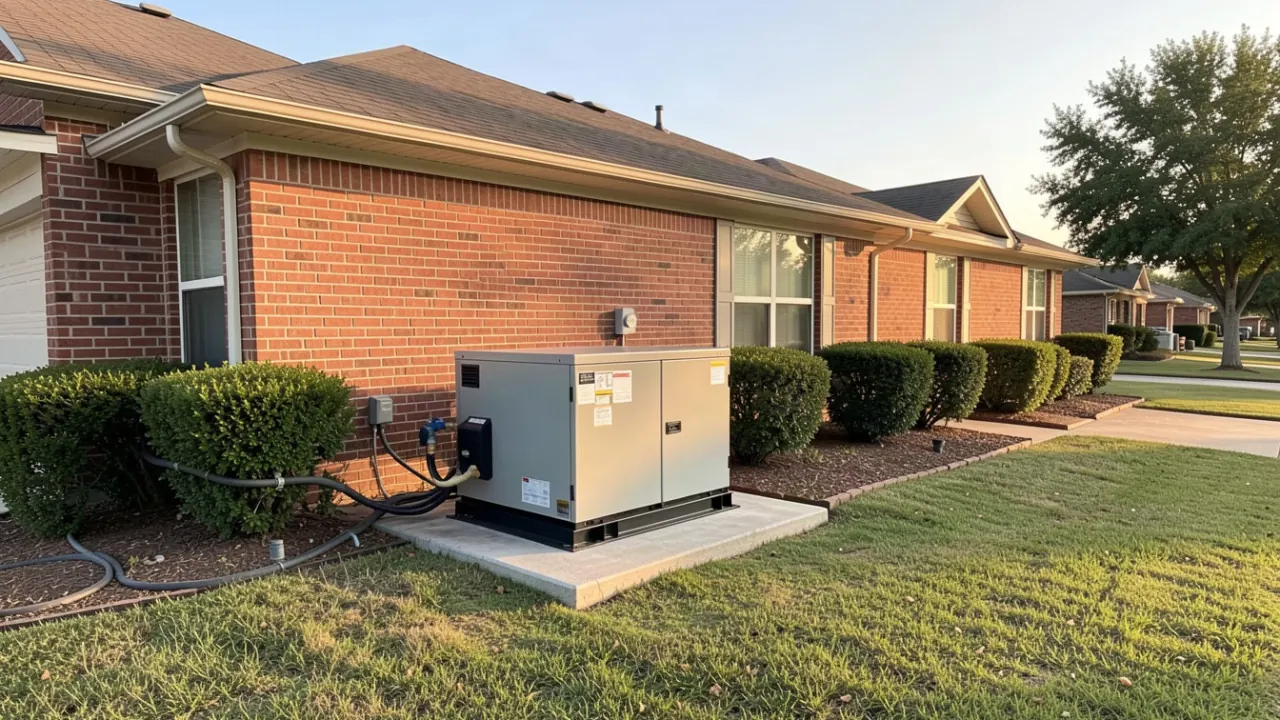
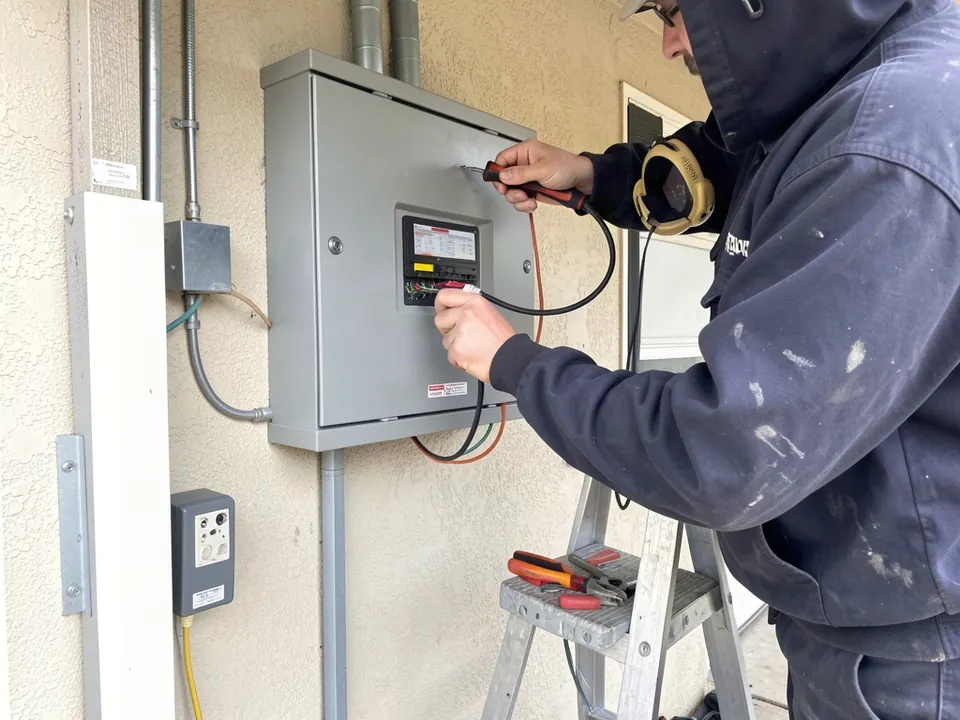
Who a whole-home unit is for
Cost guides draw the line around 22 kW. Units from 22 to 48 kW are sold as whole-house systems, while 9 to 20 kW units usually cover a partial load. A whole-home system fits households that:
- Work from home and cannot lose internet, monitors and HVAC for a day.
- Rely on medical equipment that needs steady power.
- Have two or more AC systems or an electric range, water heater or pool pump.
- Travel often and want the house protected while away, with no one there to start a portable.
Signs your home is ready for one
- You lost power in February 2021 or May 2024 and do not want to repeat it.
- The house already has natural gas service. That saves the cost of a propane tank.
- There is a level spot near the gas meter and the electric meter. Generac notes that a site close to both keeps installation cost down.
- Your electrical panel has room, or you were already planning a panel upgrade.
Natural gas or propane
Most Dallas houses with a gas stove, furnace or water heater already have a gas meter, and a whole-home unit simply tees off that supply. There are no tanks to fill and no fuel to rotate. The tradeoff is that the generator depends on the gas utility staying up during the outage.
Propane makes sense where there is no gas service or where an owner wants fuel stored on the property. It adds a tank, a regulator and refill visits. Angi reports similar yearly fuel cost ranges for natural gas and propane, so the choice usually comes down to what the lot already has and how long you want to run without help.
Either way, the generator itself should be rated for the fuel you pick. Many residential units can run on both, but the conversion has to be set up by the installer.
What is involved
- Site visit. The pro looks at placement, fuel, panel capacity and HOA rules, then confirms the lot. Dallas does not allow a home generator in a required side yard or an easement.
- Load calculation and quote. Running loads plus the largest starting surge set the size. You get a written quote.
- Permits. The electrical work needs a permit, and the gas connection is plumbing work under Texas law, which the Texas State Board of Plumbing Examiners licenses.
- Install day. Pad or gravel base, gas line, transfer switch beside the main breaker panel, and the control wiring between them.
- Startup and inspection. The installer simulates an outage to prove the switch and engine work, then the city inspects.
Cost of a whole-home system
| Item | Reported range | Source |
|---|---|---|
| Whole-house unit, 22 to 48 kW | $5,000 to $18,000 | Angi |
| 20 to 24 kW unit | $5,000 to $6,500 | Angi |
| Labor and installation | $3,000 to $5,000 | PowerOutage.us |
| Transfer switch and electrical gear | $500 to $2,500 | PowerOutage.us |
| Gas or propane connection | $500 to $2,000 | PowerOutage.us |
| Concrete pad, about 3 by 6 feet | about $1,000 | Angi |
Generac's guide puts a typical installed project at $8,000 to $16,000. Your own number depends on the distance to the gas meter, the panel and the size you need. The generator installation cost page goes deeper.
What to ask the pro
- What size do you recommend, and can I see the load calculation?
- Is the transfer switch whole-house or load-managed, and what does each cover?
- Will my gas meter and line feed this unit at full load?
- Who pulls the electrical and plumbing permits?
- What does the warranty cover, and who services the unit?
- When can you start, and how long is the lead time?
Before signing, read our generator sizing guide and the transfer switch installation page so the quote makes sense line by line.
Areas we cover for whole home standby generators
Generator questions
What size whole-home generator does a 2,000 square foot Dallas house need?
Generac says such a home typically needs a 20 or 22 kW unit for whole-home coverage. Other guides list smaller sizes for the same square footage, which is why a load calculation beats a rule of thumb.
Can my natural gas meter run a generator and the furnace at once?
Often it can, but not always. A large unit plus a furnace and water heater can exceed what a small residential meter delivers. The pro checks the meter and the gas line size during the site visit.
Does a whole-home generator need a concrete pad?
Many installers use a concrete slab, and some use a compacted pea gravel base, depending on the unit. Angi lists a typical 3 by 6 foot pad at about $1,000.
Does my HOA have a say in where the generator goes?
Many do. Ask your HOA for its rules on equipment placement and screening before the site visit, and share them with the pro so the quote reflects them.