
Small houses out, big houses in
When voters approved incorporation on April 24, 1924, the city held about 380 homes on 515 acres. Since around the 1970s, smaller houses have kept giving way to larger ones. A rebuilt house with two or three air conditioning systems, a pool pump and a big kitchen pulls far more power than the cottage that stood there before, so generator sizing is the first real conversation. A house that kept its older panel may also need work before an automatic transfer switch can go in.
Who signs off on the permit
University Park handles this a little differently from many suburbs. The Fire Marshal's Office permit guidelines include a generator permit, and that submittal asks for:
- one application
- one site plan that marks the grounding rod location
- the generator's specification sheet
Trade contractors must register with the city as collaborators for their specific credential before they can pull permits. Building permits and inspections run through the Community Development Department under the Building Official, using the 2021 International Residential Code with local amendments. One detail worth knowing: a permit becomes invalid if work does not start within 60 days, so book the install soon after approval.
Fitting a unit on a tight lot
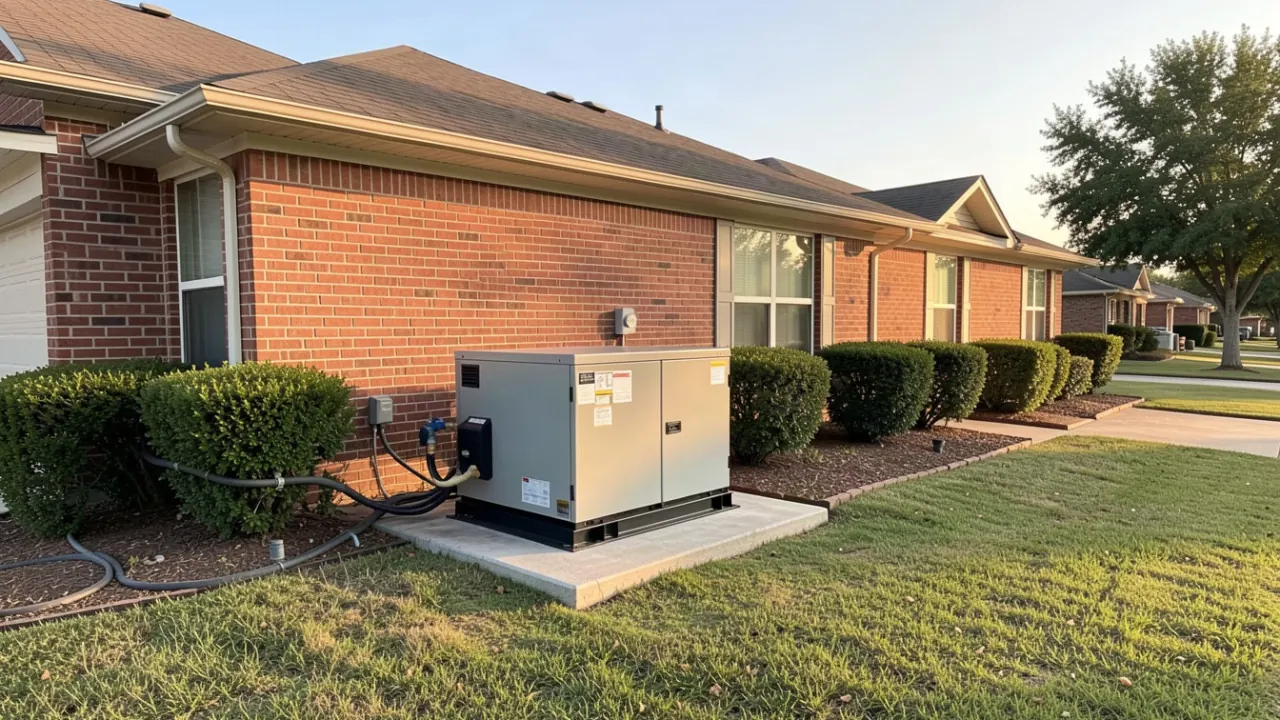
Most Park Cities installs end up in a side or rear yard, close to the gas meter and the electric service so the runs stay short. The pro measures clearances to windows, doors, vents and the property line from the maker's install manual, then checks the result against city rules. If the only workable spot is near a neighbor's bedroom window, say so in your request. It changes the conversation about placement and quiet-running models.
Before the site visit
Have a short list of what must keep running (every AC zone, or one floor), a recent electric bill, and photos of your main panel and gas meter. Then use the form to request an estimate. If you live across the line, see our Highland Park page, or Preston Hollow to the north. Background on the city is on the University Park Wikipedia page, and the rest of our Dallas area coverage starts on the homepage.
Services available in University Park
Generator questions
Does the University Park Fire Marshal review home generator permits?
The Fire Marshal's Office permit guidelines list a generator permit that asks for an application, a site plan showing the grounding rod and the unit's spec sheet. Building permits go through Community Development. The pro you are matched with confirms which apply to your install.
Will a standby generator fit beside a Park Cities house?
Usually, yes. Most go in a side or rear yard near the gas meter. The tight part is meeting the maker's clearances to windows and the property line, which the pro measures on site.
My house was rebuilt in the last 20 years. Do I need a bigger unit?
Often. Larger homes with several AC systems carry heavier loads. A load calculation from your panel and bills tells the pro whether whole-home coverage makes sense or a smaller unit on chosen circuits is enough.